The Gothic Australian Landscape

The broad open expanses of desert in the Australian landscape have often been invoked for its mystical and threatening qualities. Certainly in the Australian cinema of the 1970s there was a tendency to explore the dark and unsettling side of the landscape. The outback was thus rendered as a ‘gothic’ entity; a place where, in the words of Fred Botting,’ in their generally ruinous states, harked back to a feudal past associated with barbarity, superstition and fear’ (1996: 3). The emptiness of the land also signalled a kind of alienation or homelessness, a quality perfectly suited to the colonial past of the Australian people. Turcotte argues in his ‘Australian Gothic’ that the generic qualities of the Gothic genre lend themselves ‘to articulating the colonial experience inasmuch as each emerges out of a condition of deracination and uncertainty, of the familiar transposed into unfamiliar space’ (1998: 1). Here we have two aspects that characterise a Gothic quality for the Australian landscape. Firstly, the ruinous state of some of the small desert towns invoke a past associated with barbarism and superstition. Secondly, the colonial past of Australia creates a level of alienation from the land (at least for the settlers). Our topic here is thus the Gothic Australian Landscape, a term that we need to define before we look at how it has been represented or dealt with in cinema.
Australia here literally refers to the landscape of the continent, the Outback as it has so lovingly been called. This land ‘down-under’ is the central point in this enquiry. The term ‘landscape’ has often been used interchangeably with environment, wilderness and place and it is therefore important that we decide what landscape means for the purposes of this examination. Lefebvre says in his Landscape and Film that ‘it is our (real and imaginary) interaction with nature and the environment that produces the landscape’ (2006: xiii). The key words are ‘real’ and ‘imaginary’ for it signals a double relationship with the environment. Our definition of the landscape must therefore take into account both the actual (empirical) qualities of the land as well as the more ephemeral, emotional and intellectual responses we have to the land. He also goes on to say that by invoking the term ‘landscape’ we give a form to what was ‘pure spatial continuity’ (2006: xv). For the purposes of this enquiry we will view landscape as a collection of responses, both actual and abstract, that come together to paint a particular portrait of a given environment, in this case Australia. It is imperative that we remain aware of both spheres of meaning including the notion that the landscape we are discussing exists in relation to people’s experience of it.
The idea of ‘Gothic’ is much harder to define particularly because of its long history and multiple manifestations. Said to have begun in literature, the style of Gothic has found its way into music, architecture, and of course film. Fred Botting, in his Gothic, states that ‘Gothic atmospheres – gloomy and mysterious – have repeatedly signalled the disturbing return of pasts upon presents and evoked emotions of terror and laughter’ (Botting, F. 1996: 1). Here we see the first instance of a duality of the Gothic style when Botting speaks of responses to Gothic atmospheres as being that of terror and laughter, emotions generally seen as markedly different. This dual nature comes up again in Gillard and Thomas’ discussions of the Gothic in films. They stress the presence of Freud’s notion of the uncanny, or the unheimlich, as being crucial to the style of Gothic. They define the uncanny as ‘that which “ought to have remained secret and hidden but has come to light”’ (2009: online). Furthermore they argue that ‘it is not simply the unfamiliar in itself which generates the anxiety of the uncanny; it is specifically the combination of the familiar and the unfamiliar’ (2009: online). The trope of duality, the familiar and unfamiliar, comes in again but it is not necessarily the existence of both that generates a feeling of the uncanny but rather the way they inhabit each other. The anxiety produced by the uncanny is therefore an aspect we shall attribute to the Gothic style.
Botting further defines the Gothic by saying that ‘relations between real and fantastic, sacred and profane, supernatural and natural, past and present...remain crucial to the Gothic dynamic of limit and transgression’ (1996: 9). In this passage he mentions a number of binary opposites arguing that it is their relation to one another that contributes to the Gothic dynamic of limit and transgression. Transgression is the key word here as it signals a formidable part of the Gothic tradition. Dating back to the work of authors such as Emily Bronte, Bram Stoker and Henry James, the notion of people or entities transgressing moral boundaries and eschewing societal codes have been the subject of many a gothic novels. Botting makes a useful distinction when he says that the Gothic tradition has changed its focus over time. He says that in the 18th century the Gothic focussed more on aristocratic excess, the castle and counts, and in the 19th century the focus moved to urban, domestic, commercial and professional figures and locales (1996: 5-6) . Thus there was a move from the more isolated locales, where lawlessness reined supreme, to the overcrowded industrial urban landscapes, where binaries of good and evil were uncertain. Botting suggests a progression from ‘excess’ to ‘transgression’, which denotes a movement from more subtle forms of subversion to much more explicit ones. This can be seen in the way the horror in the Gothic style can be associated with either subtle suggestion or monstrous manifestation. Both these types of horror form an integral part of the Gothic style and neither is more important than the other. Rather, the level of fantasy or manifestation depends more on the cultural context in which a work is produced. For the purposes of this enquiry we will view the style of Gothic as encompassing both these levels of horror, i.e. excess and transgression. These two are by no means exclusive but it is useful to look at how each one functions in their own right. The goal is understand how films have used excess and transgression in different capacities and to what effects.
The aim in this collection of films and readings is to explore the various forms that cinema has created to engage with the Australian landscape and thus paint it Gothic or uncover pre-existing Gothic qualities. The era of the 1970s will be looked at specifically as well as films from the 1980s and 2000s in order to explore how this tradition (if it can be called that) has been proliferated by various filmmakers. One of the key concerns in this enquiry is to look at both so-called ‘art house’ or ‘quality’ films, such as the work of the much celebrated Peter Weir and Nicholas Roeg, and to look at what could be deemed ‘B-grade’ films, such as Terry Bourke’s Night of Fear (1972). The important thing is that viewers remain focussed on how these various films use the landscape as a tool for narrative construction. I present this collection with the belief that the Australian landscape is the key component in each of the films, although some foreground its presence more than others. The aim here is to uncover what the significance of the landscape is to each of these films and also to analyse why this trend of a Gothic landscape was invoked in Australian cinema during the 1970s and why it has continued into the 2000s with films such as The Proposition and Wolf Creek (both 2005). Finally, this collection has been compiled in the hopes of furthering the debate that exists around whether Australian Gothic can be considered a genre or movement in the Australian cinema. Thus I include the theoretical work of Gillard & Thomas, Hood and Turcotte, each of whom are enquirers into the Gothic trend in Australian creative production. Although cinema is the central focus of this anthology, viewers are encouraged to seek out other forms of artistic production that have also dealt with the Gothic Australian landscape, thus increasing the spectrum of enquiry. These forms include music and literature and recommendations for further study has been provided at the end of this collection.
Turning to the films themselves, I have divided them into four groups, each with a common thematic thread. This is not to say that these films cannot fit into other categories but rather that each of them foreground particular qualities making it more useful to look at them in relation to other films with similar preoccupations.
The Overwhelming Outback
The films listed in this category focus specifically on the landscape as an incomprehensible entity. Characters in these films become lost, consumed or confounded by the Outback. This category foregrounds the landscape more explicitly than films in other categories.
Where the Green Ants Dream (dir. Werner Herzog, 1984)
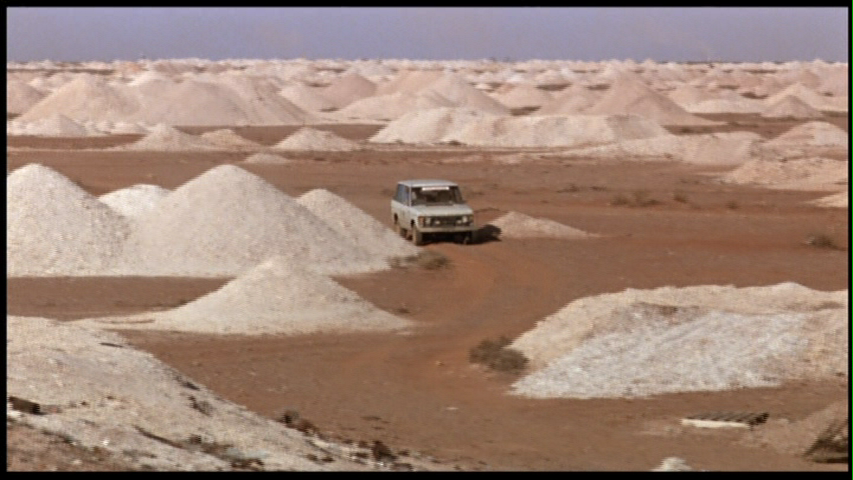
The way Herzog captures the desert landscape creates a strange sense of alienation, often confounding in its grandeur. The film is gentle and meditative, suggesting rather than illustrating. A sense of unease is built up as one is unsure of how the film will close and what will be the consequences if the land is ploughed. Herzog continually introduces new information, diverging rather than drawing to a conclusion. The resultant experience leaves you thinking about issues of colonialism, land ownership as well as man’s relationship to the natural world. More interestingly the film rests in a liminal space between being a documentary and a work of fiction. This is further problematised by the fact that Herzog fabricated the myth of the green ants to use in the film. Thus the film leaves one with more questions than answers. In terms of reading it as a Gothic text, Botting notes that Gothic literature ‘fed uncultivated appetites for marvellous and strange events, instead of instructing readers with moral lessons that inculcated decent and tasteful attitudes to literature and life’ (1996: 4). Here we can see that Herzog has done the same with a film that includes various odd and unexplainable events. Ultimately the film illustrates that even someone from outside of Australia sees the inherent Gothic quality of the vast Outback.
Picnic at Hanging Rock (dir. Peter Weir, 1975)
 In Robert Hood’s paper on Australian horror films he mentions that during the 1970s revival a sense of Otherness dominated, utilising the horror of suggestion rather than event (1994: online). Nowhere is this more powerfully portrayed than in Weir’s Picnic at Hanging Rock, a strange mystery film set in the early 1900s. What is most interesting about the film is its portrayal of the landscape as ominous and overwhelming. More importantly, Hanging Rock, a mysterious and enigmatic site, is the epicentre of the narrative. The result is a film that hints at various possibilities but never satisfies the viewer with an answer. Here, as in Where the Green Ants Dream, the landscape is shown to be an ineffable entity, one riddled with mystery and ultimately confounding the main characters, or consuming them in this case.
Walkabout (dir. Nicholas Roeg, 1971)
Australian Gothic cinema chooses uncosmetic settings and characters as the foundation on which to construct its narratives of suspenseful discomfort and disorder, building the remarkable on the unremarkable. (Gillard and Thomas, 2009: online)
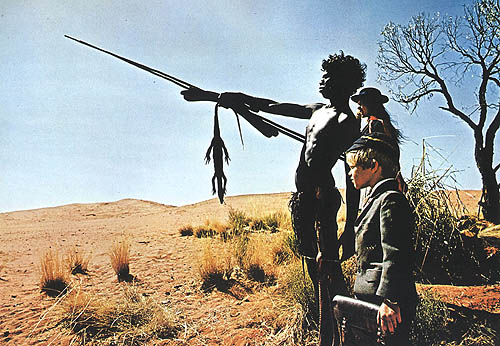
This is by far one of my favourite films on the list. It has a playful, childish aesthetic that makes the film feel like a fairytale. The narrative even plays out like a classic hero’s journey with the Outback as the setting for the journey. This is a coming-of-age story that begins in the direst of circumstances. The landscape is mostly ordinary but Roeg’s playful editing and storytelling suggests that there is more to be understood about the vast Outback. Suggestion is used more than actual event and overall the film is quite low key. It is interesting to look at how the children interact with the landscape in contrast to how the Aboriginal boy interacts with it. If landscape is defined by peoples’ experience of it then this film presents the viewer with more than one landscape. There is a dual progression in the film. Firstly, the children transform from being alienated by the landscape, to gaining independence and power over it. On the other hand we see how the Aboriginal boy goes from being at one with the Outback to being alienated from it.
Rural Decay
This category focuses on films where rural societies (or small towns) are represented as sites of moral decay and isolation. It is this isolation from larger structures of justice that lead characters to transgress social and moral norms resulting often in dire consequences. The role of the landscape here represents, like the castles in18th Century Gothic literature, a place away from civilised society where barbarism can run amok.
Summerfield (dir. Ken Hannam, 1977)
Gothic films have a tendency towards the recurrence of a “disturbing, nightmarish atmosphere”,10 where the “normal is revealed as having a stubborn bias towards the perverse, the grotesque, the malevolent”. (Gillard and Thomas, 2009: online)
Summerfield is the perhaps the most subtle and unsuspecting film in this collection.  What starts out as a fish-out-of-water story develops into a mystery and eventually leads to secrets being uncovered. What works best about this film is the way it suggests a dark, unsettling undercurrent to the sunny town. Summerfield itself is a beautiful island escape but all is not well and the final revelation is reminiscent of many classical Gothic motifs as well as the work of Australian born, Nobel Prize-winning author, Patrick White. The secluded nature of Summerfield is the reason (not the sole one but certainly an important one) for the story’s major secret. Thus landscape is a leading factor in the narrative of the film. Instead of seeming barren and desolate the landscape is rather pleasant but this is slowly subverted as the teacher uncovers the dark secrets of the island.
The Proposition (dir. John Hillcoat, 2005)
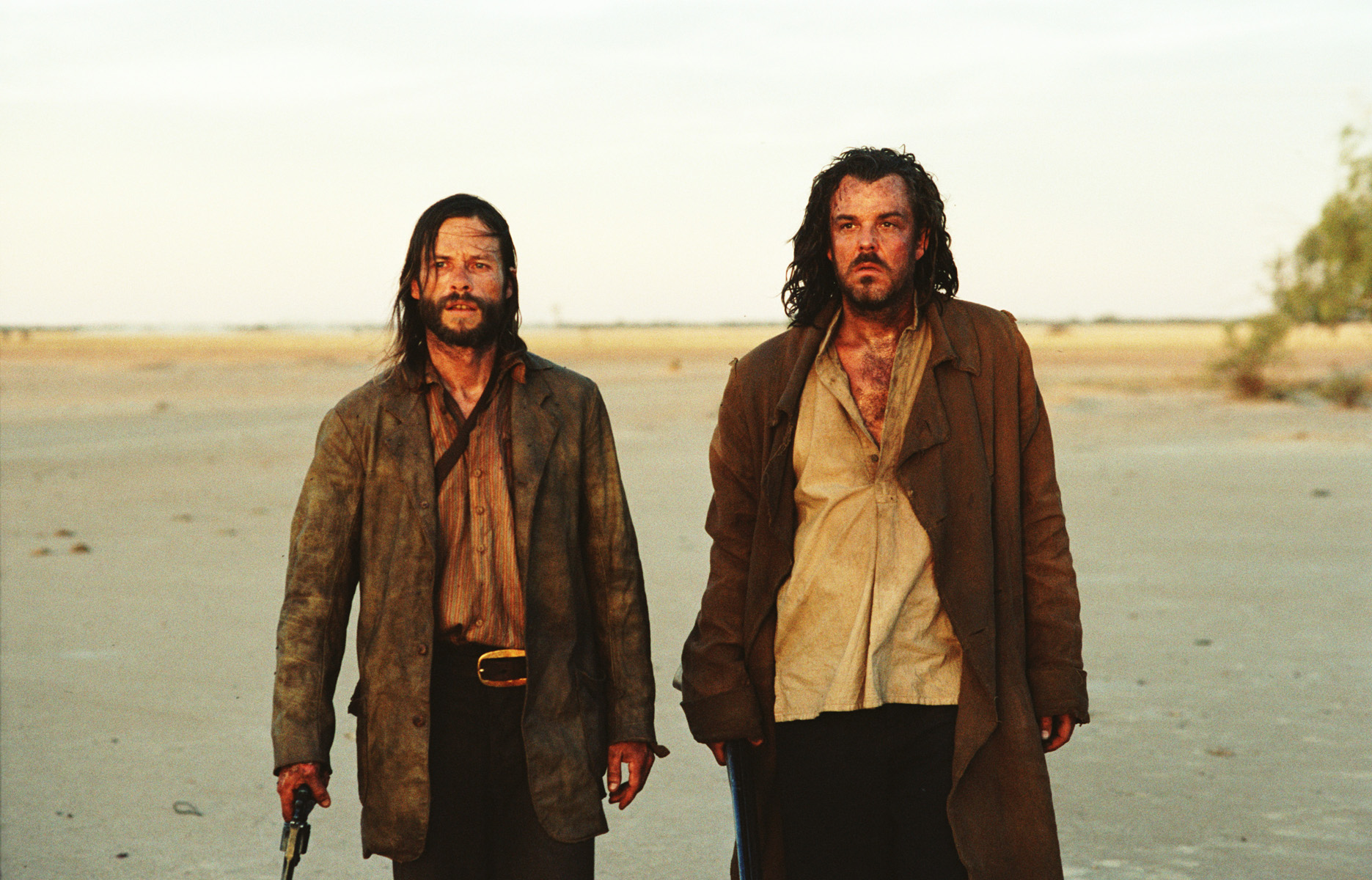
Hillcoat’s Australian take on the Western film is a brutal portrayal of murder, incarceration and betrayal. The dry, arid landscape is a perfect metaphor for the desolation of the characters’ moral value systems. Moreover there exists a relativism about the nature of morals in this society for although some actions have noble intentions they often lead to horrific consequences. No character is left without blood on their hands and one feels a deep anxiety throughout most of the film. Whereas most films show characters in unsettling situations, this film actually places the viewer in an unsettling situation. The landscape itself is both pastoral and barren at various moments and the film essentially plays into Botting’s statement that ‘dualities of mind and body, reason and desire, are repeatedly invoked’ in the Gothic tradition (1996: 19). The society represented in this film is a colonial one and a sense of alienation pervades the characters. Being separated from the more structured society of the mother colony leads to a kind of lawlessness whereby the characters are allowed to transgress boundaries because of the lack of a rigid hierarchy. A similar kind of society can be seen in Razorback, although it is set centuries later.
Razorback (dir. Russel Mulcahy, 1984)
 This film seems at first to be a standard monster movie but speaks volumes about rural Australia and the Outback itself. Although the giant boar seems to be the main antagonist of the film it soon becomes evident that there are more sinister forces at hand. ‘The human inhabitants are largely immoral and as arbitrarily violent as the huge razorback boar itself’ says Hood, commenting on the isolated town of the film (1994: online). This is similar to the town shown in The Proposition for the problems facing this town are due to isolation from more formal societal structures. The question that this film raises is whether the giant razorback is due to the remoteness of its existence or to the lawlessness of the town. Mulcahy makes the landscape a central factor in the film’s aesthetic, particularly in a dream sequence reminiscent of science fiction films of the 1960s & 70s. The vast emptiness of the Outback is ominously represented as one of the major obstacles the male protagonist has to overcome. What is most striking about the film is that although it plays into the Hollywood style of monster movies ala Jaws, it has a darker undertone, especially for the characters. Gillard and Thomas state that in the so-called ‘Gothic’ tradition of Australian films, rural Australia is portrayed as ‘perverse and grotesque’ (2009: online). This is certainly the case with Mulcahy’s film for all but a few characters are shown to be monstrous and apathetic.
The Uncanny Landscape
The two films in this category take place in markedly different locations but hold a level of uncertainty as the common thread. The uncanny is important in this category for characters are often faced with manifestations that cannot be explained logically. Although the landscape does not seem important at first it is essentially the leading cause of this uncertainty for the crux of these films depends heavily on the locations where the narratives unfold.
Homesdale (dir. Peter Weir, 1971)
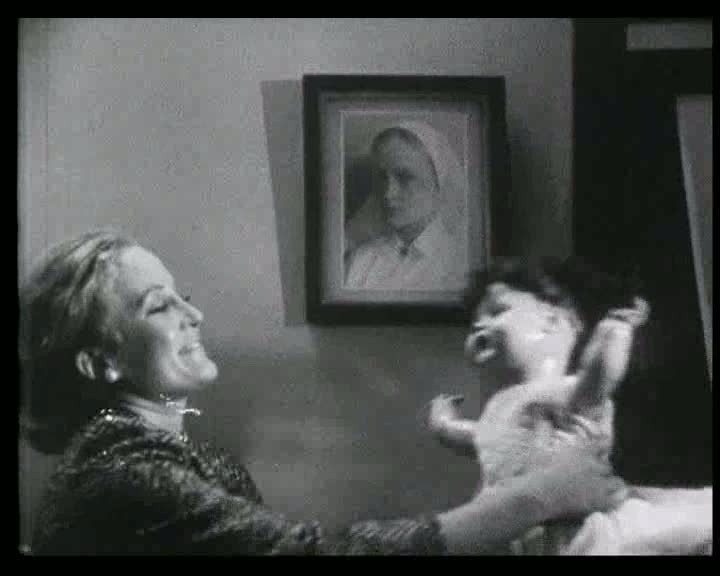
...the uncanny renders all boundaries uncertain and... leaves readers unsure whether narratives describe psychological disturbance or wider upheavals within formations of reality and normality. (Botting, F. 1996: 11)
So is the case with Homesdale, a short film by acclaimed director Peter Weir. The film tells the story of a boarding house where mentally disturbed people go to overcome (or perhaps indulge in) their twisted fetishes. The film takes advantage of both comedy and horror but most importantly it is unsettling in its uncanny nature. Certain events that occur in the film (most later on) have no simple explanation; they are neither attributed to individual psychosis or to broader changes in reality. The film possibly rests in the genre described by Tzvetan Todorov as the ‘Fantastic’, a category that in his words ‘must oblige the reader...to hesitate between a natural and supernatural explanation of the events described’ (1975: 33). This can be seen in the treasure-hunting scene. The landscape itself is brought into perspective at certain points in the film, often overwhelming the characters’ figures. Once again it is the isolated nature of Homesdale that allows the deranged characters to indulge in dark fetishes.
The Last Wave (dir. Peter Weir, 1977)
Australian Gothic cinema is not solely concerned with the supernatural or the horrific in the most obvious sense—the terror of the familiar, or the ordinary, provides equal impetus for narrative and stylistic development. (Gillard and Thomas, 2009: online)
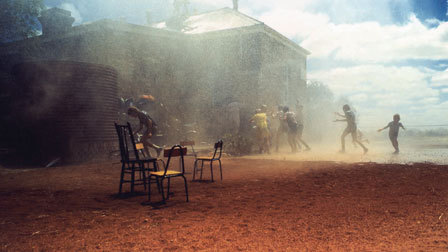
The opening of Weir’s film immediately suggests a perversion of the everyday. As the film unfolds the viewer is faced with increasingly strange and supernatural events, all of which occur in the realm of the everyday. This is what unsettles the protagonist most as he is essentially haunted in his own house. The landscape here is not the vast Outback but the constricting city streets. As was the case with 19th Century Gothic literature the cityscape with its uncertain moral boundaries becomes the site of fear and horror. The past also makes a nasty appearance in the form of an ancient curse. The film employs many of the tropes of the Gothic tradition but most importantly it is the only film in this collection that deals specifically with the urban landscape.
In The Middle of Nowhere
Landscape in this category is what places the characters in jeopardy because of its isolated nature. Whereas in the ‘Rural Decay’ category isolation leads to lawlessness, this category goes even further as the landscapes here are devoid of human civilisation. The distance from a town or city is what leads to these characters’ demise.
Night of Fear (dir. Terry Bourke, 1972)
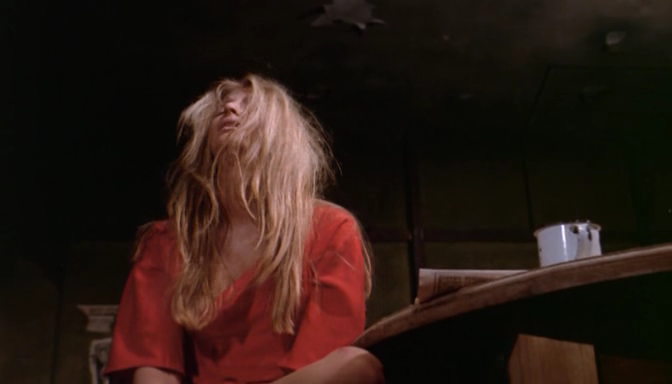
This film I would locate in the B-grade genre. It is reminiscent of the kind of exploitation films that became prominent during the 1970s in the USA and Italy (the work of Wes Craven, Tobe Hooper, Dario Argento, Ruggero Deodato). Night of Fear takes this trend to the extreme by stripping the film of all but the bare essentials, i.e. scantily-clad, promiscuous girl being chased by a deranged man. Although the film can be easily brushed off as crass and shallow it does display one important aspect of the outback. Namely that there are many untouched or uncivilised areas throughout the continent. It is exactly this isolation that puts the protagonist in danger. Her inability to escape from the wild forest becomes her ultimate downfall. Turcotte notes that the Gothic style ‘emphasises the horror, uncertainty and desperation of the human experience, often representing the solitariness of that experience through characters trapped in a hostile environment’ (1998: 1). The environment she finds herself in is not inherently hostile, but in its remoteness has perhaps led the deranged man to become disconnected from the world in the first place. The important point to note about the film is the way the environment is never focussed on particularly yet it is the key factor behind her entrapment.
The Long Weekend (dir. Colin Eggleston, 1978)
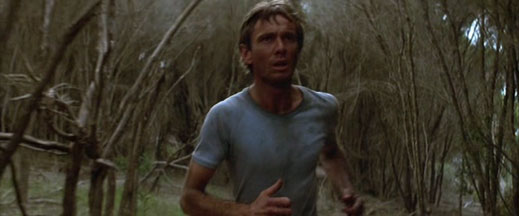
‘Nature strikes back!’ has become a common term when discussing a certain trend in cinema, namely the big bug movies of the 1950s in the USA. This Australian take on the trend replaces oversized creatures with everyday animals such as birds and possums. The threat seems not so much to come from the animals but rather from the landscape itself. The couple are unable to escape the desolate campground and this remoteness makes them vulnerable to vengeful animals. Hood says that the animals act ‘in a way which, in a less intense context, we would consider 'ordinary'’ (1994: online). This invokes the Gothic aspect of the everyday as displaying perverse and unfamiliar elements. What should have been a standard camping trip turns into a fight for survival, made worse by the fact that they are still in recognisable surroundings. Viewers should pay close attention to how the natural environment attributes to the couple’s demise.
References
Botting, F. 1996. Gothic: The New Critical Idiom. USA and Canada: Routledge
Gillard, G. and Thomas, D. 2009. ‘Chapter 9: Gothic’. http://www.garrygillard.net/writing/tentypes/gothic.html
Hood, R. 1994. ‘Killer Koalas: Australian (and New Zealand) Horror Films. A History.’ In Morish, B (ed.). The Scream Factory (US). June/July. At http://www.tabula-rasa.info/AusHorror/OzHorrorFilms1.html
Lefebvre, M. 2006. ‘Introduction’ in Landscape and Film. New York, London: Routledge
Todorov, Tzvetan. 1975. The Fantastic: A Structural Approach to a Literary Genre. Trans. Richard Howard. New York: Cornell University Press.
Turcotte, G. 1998. ‘Australian Gothic’ in Mulvey Roberts, M (ed). The Handbook to Gothic Literature. Basingstoke: Macmillan.
Recommendations for Further Enquiry
The Burnt Ones by Patrick White (Short stories)
The Creek of the Four Graves by Charles Harpur (Poetry)
Australia - a prose poem by Ania Walwicz (Poetry)
The Murder Ballads by Nick Cave & The Bad Seeds (Music album)
